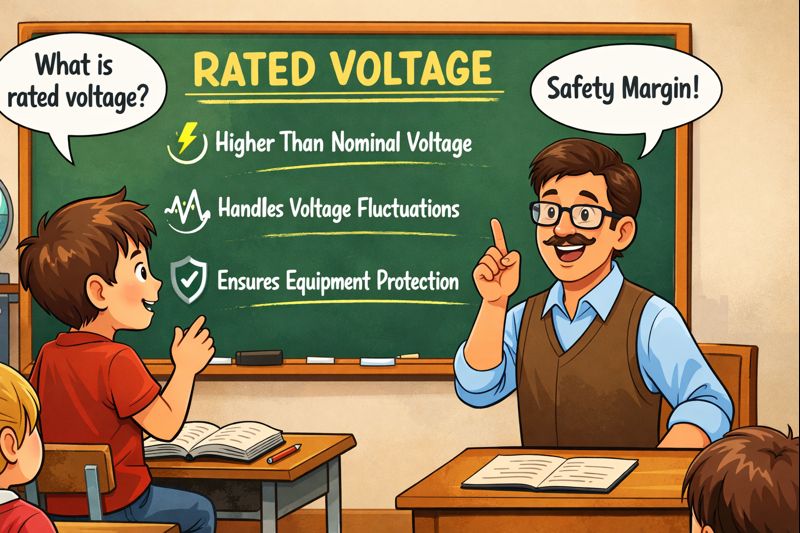
After exploring about nominal voltage, I came to the next parameter of power system electrical equipment which is “rated voltage”. And I also understand that the manufacturer considers this voltage as the best voltage to design their electrical equipment.
Hence, I’m explaining about the rated voltage in this post.
What is the meaning of rated voltage?
Rated voltage is the specified RMS voltage at which electrical equipment—such as alternators, transformers, etc.—is designed to operate safely and continuously during the normal operating conditions, also in allowable voltage variation.
Hence, we can conclude that the rated voltage is one of the most important parameters for all electrical appliances.
Note: Typically, rated voltage is derived from nominal voltage.
Practical Significance of Rated Voltage
“If you want to know why rated voltage matters, first learn the nature of voltage—when it stays disciplined, the system dominates; when it crosses the line, equipment doesn’t survive.”
In a real power system, the voltage at one substation and at another substation does not remain constant as power flow between them. It varies with load condition, fault conditions. During peak load hours (evening or morning) or system disturbance the voltage can fall or fluctuate, while under light-load conditions, the voltage raises. This variations are calculated and predicted to remain under permissible operating ranges as much as possible.
So, the equipment manufacturers design teams are also aware about these voltage variations and design their equipments to handle this voltage variations for lifetime operation.
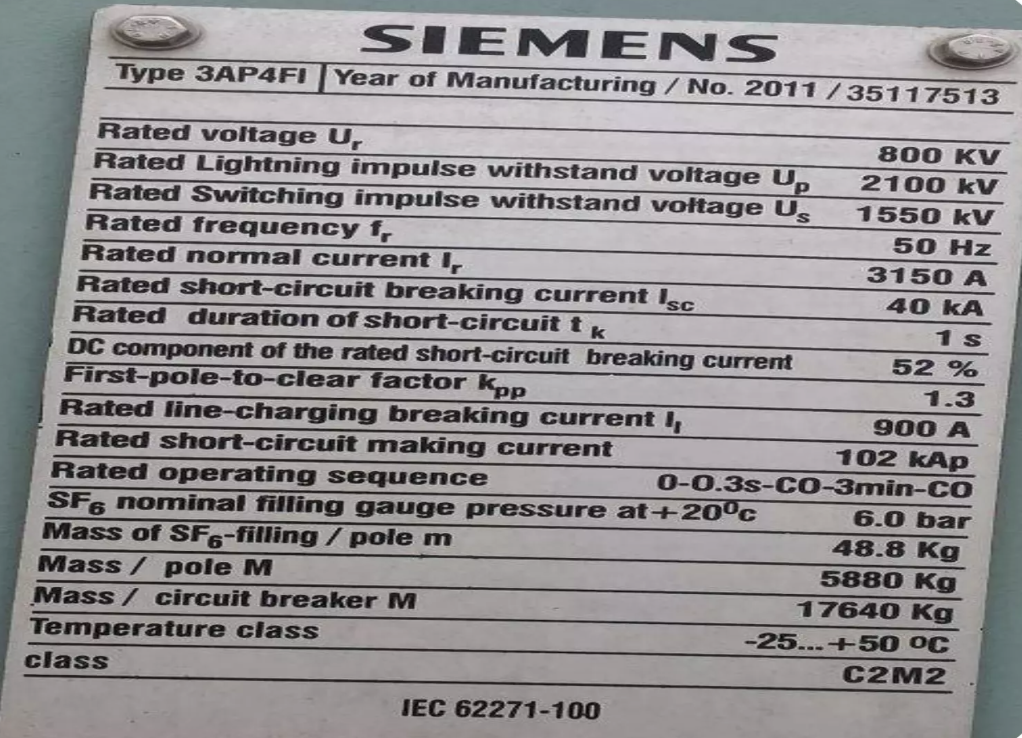
For example, the 765kV digital substation is located at Navsari in Gujarat uses electrical equipment such as switchgear panels, circuit breakers with a rate voltage of 800kV allowing voltage variation.
Did you noticed? In the above example, you can clearly see that the rated voltage is much higher than the nominal system voltage. Yes, the manufacturer and buyers can ensure that this equipment can safely transmit or operate under voltage fluctuations as per the design. Hence, the rated voltage is not just a design value, but a critical parameter that ensures the safety, stability and long life of power system and its equipment.
Is Rated Voltage chosen randomly by Manufacturer?
One natural question that comes to our mind is: How do manufacturers decide on the specified RMS voltage? Is it chosen randomly?
After knowing about the importance of rated voltage, I get a doubt: a 765 kV substation, will have many type of equipment, all supplied by different manufacturers. Each and every manufacturers may have different design concept, so how do all these different manufacturers even from different countries choose the same rated voltage?. Is it decided by client?
While researching the answer to this question, I came to know that rated voltage is not chosen randomly by manufacturers. It is determined and calculated by National and international standards, system operating practices and safety requirements. Organisation such as IEC/IEEE/ANSI are playing a bigger role in standardise.
Each country adopts different voltage levels that suit its power system design, geographic conditions, historical development and their own country practices without replacing international standards.
Nominal Voltage Linked to Rated Voltage
International organisation establishes common voltage classes and insulation levels. These standards ensure that equipment from different manufacturers can operate together safely.
Common example for Transmission voltage in India
| Nominal system voltage in kV (For substation rating) | Rated system voltage in kV (For equipment rating) |
| 765 | 800 |
| 400 | 420 |
| 220 | 245 |
| 132 | 145 |
| 33 | 36 |
So, nominal voltage is decided in the starting stage of planning the system. Higher voltage or specified rms or rated voltage decided based on nominal voltage and approved standard.
How this rated voltage is calculated?
As already discussed, the actual power system does not maintain the constant voltage and may experience various disturbance which can lead the equipment do operate above the nominal system voltage. Therefore, engineers design their system which can handle ±5% to ±10% variation around the nominal system voltage
You can take this simple Intuition: Imagine a car. Think of the nominal system voltage as the cruising speed of the car, and the rated voltage as the maximum speed the car is designed to handle continuously for a long time. You don’t drive the car at this speed all the time, but the car needs to be designed to survive it safely.
Conclusion
From everything, we understand that in real power system, voltage never be constant. It changes with load conditions, system disturbances and operating scenarios. Because of this behaviour, the electrical equipment cannot be designed for this nominal system voltage. Instead, engineers use rated voltage which provides safe margin to handle this variations.
Rated voltage not chosen randomly by manufacturers mostly it is regulated and controlled by international organisations.
Simply, the nominal system voltage tells us how a system normally operates, while rated voltage tells us how well the system designed to survive this real world conditons.